
I have a private way of making changes. If I’m about to cut my hair, I don’t mention it in the week leading up to the appointment. If I’m thinking about a tattoo, I don’t float the idea in conversation like a balloon I’m hoping someone will hold for me.
If I’m changing something small but visible, like switching my brow shape or finally getting my ears re-pierced after ignoring them for years, I tend to do it first and talk about it later, if I talk about it at all.
This is not because I’m mysterious. I’m not. I live in a small apartment in Florence where the mirror shows everything, including my laundry rack and the slightly chipped mug I keep using. I am protecting a decision.
Because the moment I announce a change, the change stops being mine. It becomes a group project. It becomes a debate. It becomes something I have to justify, defend, explain, soften, or sell. And my body, at least for me, has never been a place where I want to be persuasive.
I learned this the slow way, like most things I actually keep.
I Used to Announce Everything Like I Needed Permission
When I was younger, I talked about changes before I made them. I did it in a casual way, like I wasn’t asking, but I was. “I’m thinking of cutting my hair short.” “I might get a tattoo.” “I’m considering filler.” “I want to start wearing less makeup.” It sounded like conversation, but it was really a trial run.
I wanted to see the reaction first. I wanted to know if I was about to disappoint someone, or shock someone, or become a version of myself they wouldn’t recognize. I wanted reassurance that I would still be liked.
That’s an embarrassing thing to admit, but it’s also common, and I don’t think shame helps anyone grow out of it. People ask for permission in disguised ways all the time.
They do it with their hair, their clothes, their jobs, their relationships. They ask for permission to change because change is risky, and being disliked is a fear that comes dressed as practicality.
Sometimes the reactions were supportive. Sometimes they were strangely intense, like my hair belonged to someone else’s memory. “No, don’t cut it, you’ll regret it.” “But you look so feminine with it long.” “A tattoo will ruin your skin when you’re older.”
Even the compliments landed wrong. Not because they meant harm, but because they subtly reminded me that my body was being managed, monitored, curated by other people’s preferences.

I’m Not Trying to Shock People. I’m Trying to Keep My Choices Clean
There’s a difference between doing something quietly and doing something for a reaction. I’m not interested in surprise as drama. I’m interested in surprise as freedom.
When I don’t announce a change, I get to experience it directly, without rehearsing. I get to feel the immediate sensation in my own body first. The lightness after a haircut. The slight tenderness around a new tattoo. The strange unfamiliarity of seeing a different outline in the mirror.
That first moment is important to me. It’s the moment the change becomes real in a way no conversation can replicate. It’s the moment I learn whether the change feels like relief or like costume.
If I’ve already discussed it with three people, the moment is crowded. It’s full of their predictions. Their fears. Their opinions. Their imagined outcomes. I want the moment to be mine. Just mine. Quiet, unedited, and honest.
The Real Reason: My Life Has Enough Committee Meetings
My body used to be a topic. I treated it like a project I was constantly adjusting to be more acceptable, more attractive, more coherent.
Bad relationships taught me that my appearance could become a bargaining chip. If I looked a certain way, I was treated better. If I looked tired, I was asked what was wrong. If I looked too put together, I was accused of trying too hard. There was always an interpretation.
I made impulsive haircuts after arguments. I changed my makeup style after breakups. I got tattoos without telling anyone because I wanted something that couldn’t be negotiated. Some of those choices were wise. Some were just a way to feel like I had agency when I didn’t.
But the pattern taught me something useful: the more I let other people into my decision-making process about my body, the less I trusted myself.
Trust is built by doing things and surviving them, not by discussing them in advance until they feel safe.
My “48-Hour Silence Rule” Before Body Decisions
Here is the practical tip I use, because impulsivity can feel like freedom until it turns into regret. Before I make a change to my body that isn’t easily reversible, I give myself 48 hours of silence. Not silence from my own thoughts. Silence from other people.
I don’t text friends about it. I don’t ask for opinions. I don’t search for “before and after” videos until my brain turns into mush. I don’t spiral into a mood board. I keep the decision inside my own head and see if it holds its shape.
If after 48 hours I still want the change, and the desire feels steady rather than frantic, I move forward. If the desire fades, I let it fade without calling it a failure. It was just a feeling passing through. Not every feeling deserves a permanent mark.
This rule has saved me from at least three haircuts I would have made out of pure emotional weather. It has also helped me commit to changes that were right, because they kept returning without needing constant reassurance.
“But What About People Who Care About You?”
People who care about you will adjust. People who care about you will still recognize you, even if your hair is different or your face looks softer or your skin looks more marked.
Sometimes people get unsettled because your body is part of how they categorize you. I understand that. Humans are pattern-making machines. We like continuity.
But my body is not here to provide continuity for other people. It’s here to carry me through my life. And my life changes me, like it changes everyone. I don’t owe anyone advance notice of that.
If someone is genuinely close to me, they will find out. They will see it. They will ask, and I will answer if I want to. I am not against intimacy. I am against pre-approval. There’s a difference.
The Honest Part: I Like Being the First Witness
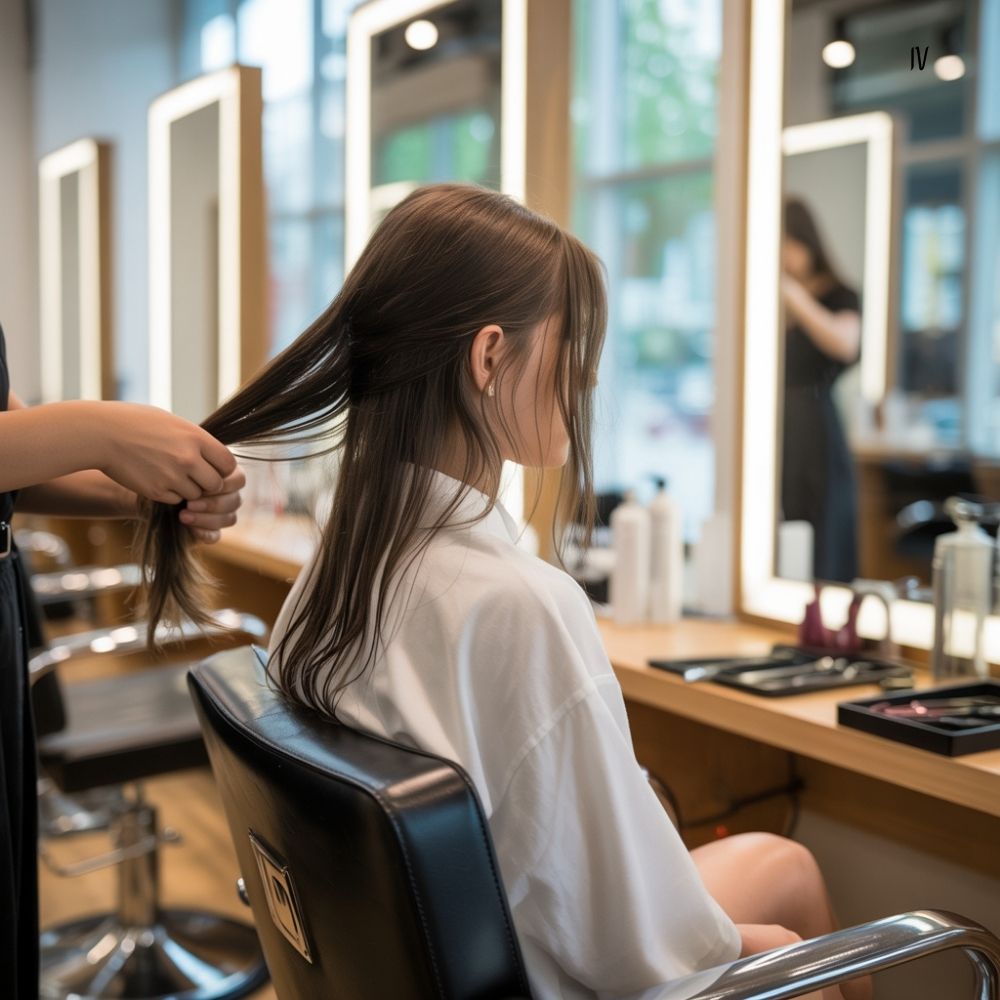
There is something quietly powerful about going to the hairdresser, watching the mirror, feeling the scissors, and not having anyone’s voice in my head except my own. Something is grounding about getting a tattoo and letting the experience be physical before it becomes social.
I want my relationship with my body to come first. Then, if I feel like it, I let other people have their reactions.
When I change something about my body without announcing it, I’m reminding myself that I’m allowed to make choices without an audience. I’m allowed to evolve without explaining it in advance. I’m allowed to be a person, not a consensus.
And honestly, after years of trying to live beautifully and failing quietly at it, that kind of permission feels like the most beautiful thing I can practice.