
There are evenings when my apartment feels too much like me in a saturation way. The same chair. The same towel hanging slightly crooked. The same corner of the kitchen counter where I drop receipts. The same view out the window where the light does the same slow fade.
It’s a lived-in apartment, which I like most days. But there are days when I want it to feel like someone else’s life, the way you sometimes want to wear someone else’s coat because it smells faintly of a world that isn’t yours.
So I put on a playlist. Those playlists make me feel like I’m staging a version of myself I don’t have the energy to maintain. It’s what I put on when I want my apartment to feel like someone else’s life, meaning a life that is slightly calmer, slightly more composed.
The funny thing is that it works, not because the music is magical, but because it creates a new context. The room is the same, but the atmosphere becomes different, and atmosphere is a kind of permission.
There’s also one practical hack that makes this habit useful rather than avoidant, because anything that makes your apartment feel like someone else’s life can quickly turn into a way of not living your own.
What I’m actually trying to change when I put the playlist on
When I want my apartment to feel like someone else’s life, what I’m really craving is a different internal rhythm.
Some days I come home and everything in me is too fast. My thoughts keep running. My body feels like it’s still outside, still performing. Other days everything feels too flat, like the day took my energy and returned it in small coins.
On both kinds of days, silence is not neutral for me. Silence becomes a screen for my brain to project itself on. Music gives the brain something to hold that isn’t a thought.
But the kind of music matters. If it’s too emotional, it intensifies me. If it’s too upbeat, it feels like a lie. If it’s too familiar, it keeps me in my old loops. The playlist has to feel slightly like a new room.
That’s why the playlist I use is built around a specific mood: late-night European radio that sounds like it’s coming from the next apartment over.
Not cinematic. Not inspirational. Not dramatic. Just elegant, low-friction music that makes the room feel inhabited by a calmer person.
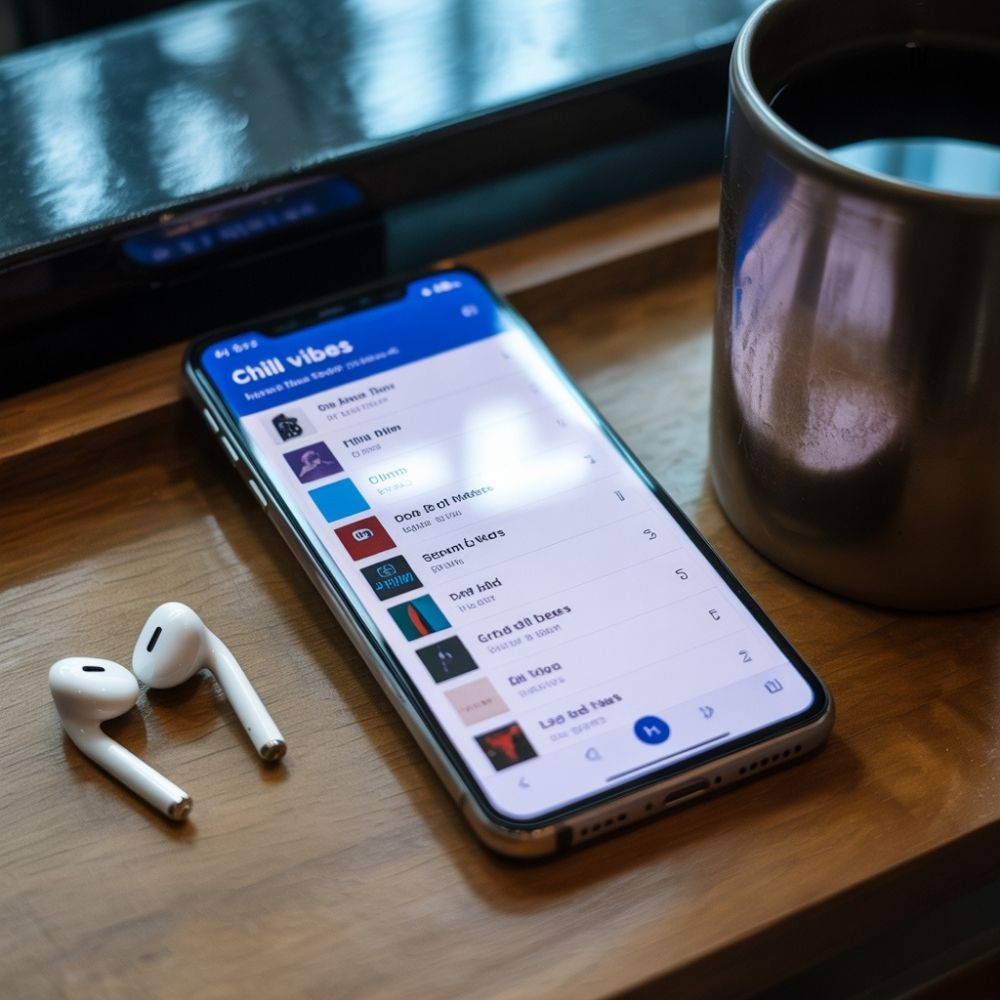
The playlist mood: “next-door life” music
If I had to describe it in a way that makes sense, it’s a mix of:
Soft jazz that doesn’t demand attention, bossa nova that feels like warm air, old Italian or French songs that are melodic but not theatrical, a few instrumental tracks with brushed drums and slow bass lines, and occasional modern songs that sound like they could be playing in a bar where nobody is trying too hard.
The tempo is moderate. The vocals are not too sharp. The production isn’t aggressively clean. I want it to feel slightly analog, slightly imperfect, like the music is in the room rather than injected into it.
I don’t put on “sad girl” music. I don’t put on music that makes me remember someone. This is not a playlist for emotional excavation. It’s a playlist for changing the air. When it’s on, I stop feeling like I’m trapped in my own interior.
The hack: I assign the playlist one job, and it isn’t “make me feel better”
Here is my practical hack, the thing that keeps this from becoming a performance habit where I try to soundtrack my emotions into submission.
I give the playlist one job: it is the transition between day and evening. That’s it.
I don’t put it on to fix my mood. I put it on to mark a boundary. It plays while I do two or three small actions that gently reset the apartment, and then I let it continue quietly in the background if I want, but the job is already done.
The actions are simple and consistent because consistency is what makes habits feel real:
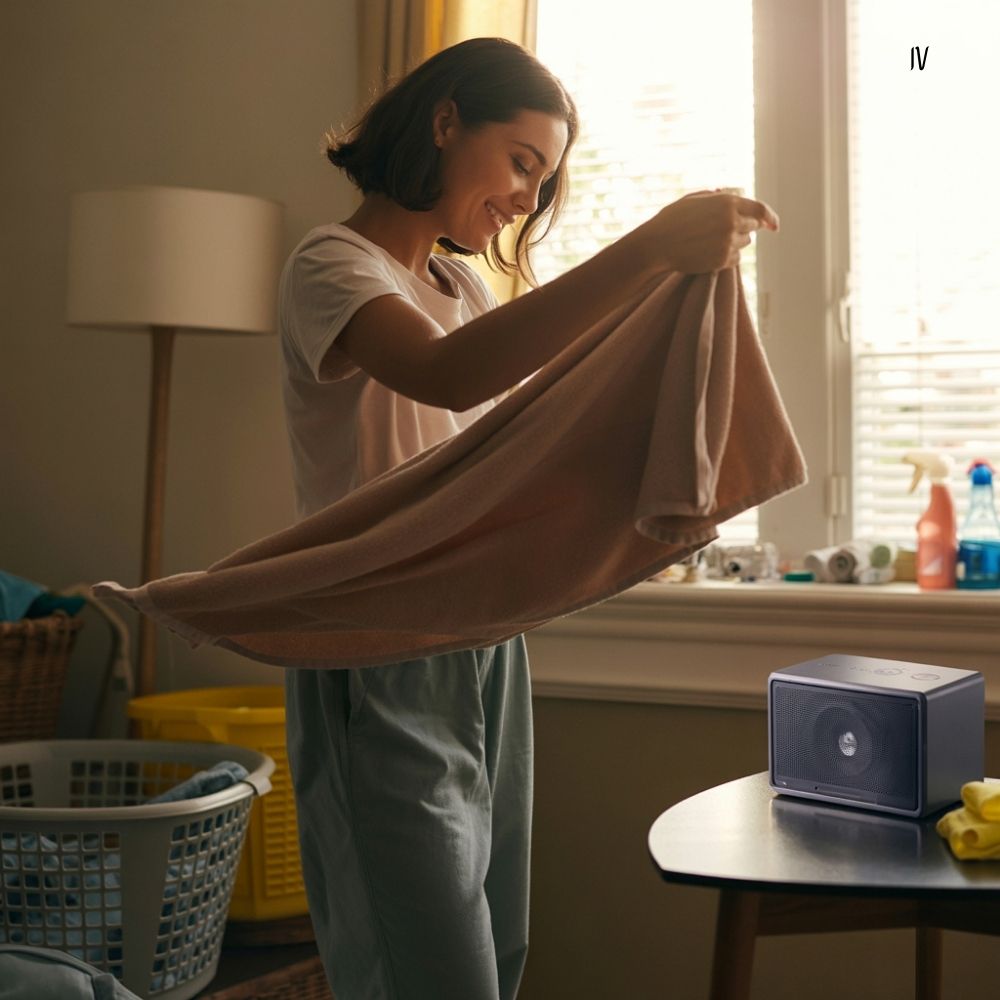
I change into home clothes, I rinse or stack the dishes, I wipe the kitchen counter, and I open the window for five minutes if the air feels stale. Nothing intense. No deep cleaning. Just enough to make the room feel slightly more cared for.
If I do those actions with the playlist on, the apartment shifts, and I shift with it.
If I skip the actions and only use the playlist, it turns into fantasy, and fantasy is fun until it makes your real life feel worse by comparison. I don’t want that. I want the playlist to support my life, not replace it.
What it looks like in practice, in my actual apartment
I put the playlist on low, not loud, because the goal is atmosphere, not coverage. I don’t want to drown out my thoughts aggressively. I want them to soften.
Then I do the small reset. I can usually do it in ten minutes.
The funny part is that the apartment doesn’t look radically different afterward. It’s still my small imperfect space. But the room feels less like a pile of leftover day, and more like a place where an evening can begin.
Sometimes I cook. Sometimes I eat something simple, beans, toast, an egg, whatever feels steady. Sometimes I shower. Sometimes I read a few pages and stop. The playlist doesn’t dictate the rest of the night. It just makes the beginning of the night feel less blurred.
And yes, it also makes me feel like I’m living someone else’s life for a while, but not in a delusional way. In a gentle way, like borrowing a calmer nervous system.
Final Thoughts
The playlist I put on when I want my apartment to feel like someone else’s life is not about taste. It’s about rhythm.
It’s a low, elegant, next-door-life kind of playlist that changes the air in the room, and it works because it marks a boundary between day and evening without requiring motivation. My hack is simple: I give it one job, transition, and I always pair it with a small ten-minute reset so it supports my real life instead of becoming a fantasy soundtrack.
Sometimes that’s all I need. Not a new apartment, not a new identity, not a dramatic reinvention, just a small shift in atmosphere that makes the same room feel softer, and makes me feel less trapped inside my own head.
It doesn’t fix everything. It just makes the evening possible. And on certain weeks, that is exactly the kind of help I actually use.