
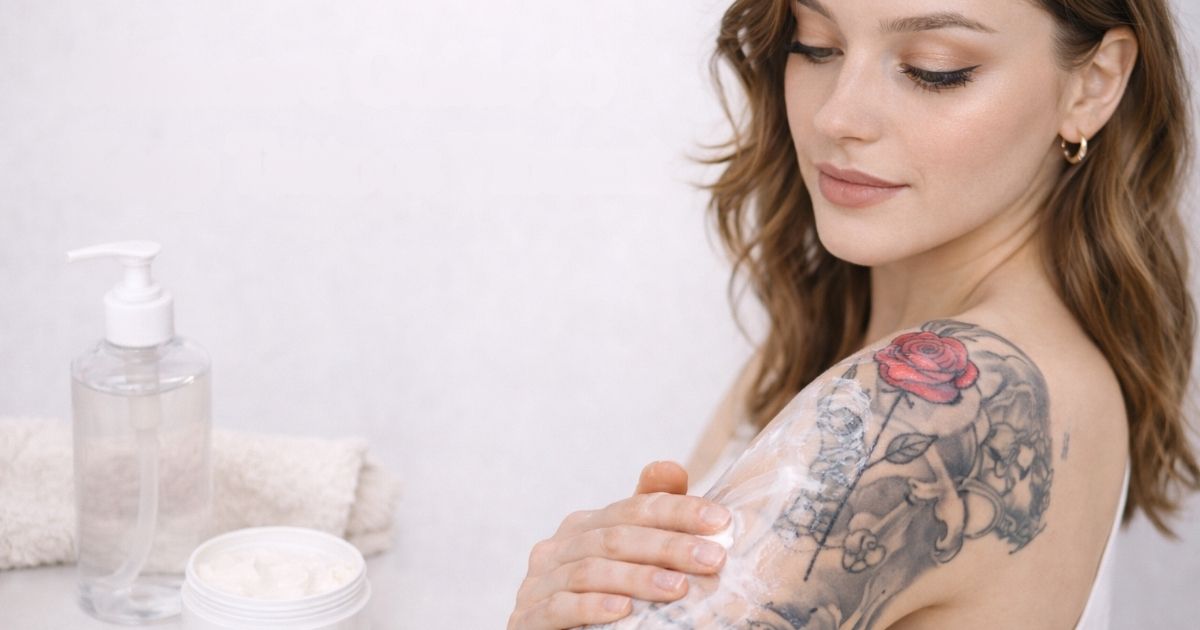
A tattoo does not stop changing after the ink settles into your skin. Over time, skin naturally renews itself, reacts to sun exposure, and responds to environmental stress. Because tattoos live within the skin’s layers, the way you care for your skin directly affects how your tattoos look years later.
Many people focus on aftercare during the first few weeks of healing, but long-term skincare is just as important. Proper hydration, sun protection, and gentle skincare habits can help preserve color, prevent fading, and keep tattoo lines sharp.
This guide explains how tattoos interact with your skin, which skincare habits protect tattoo quality, and what daily routines help keep tattooed skin healthy and vibrant.
Why Tattooed Skin Needs Special Care
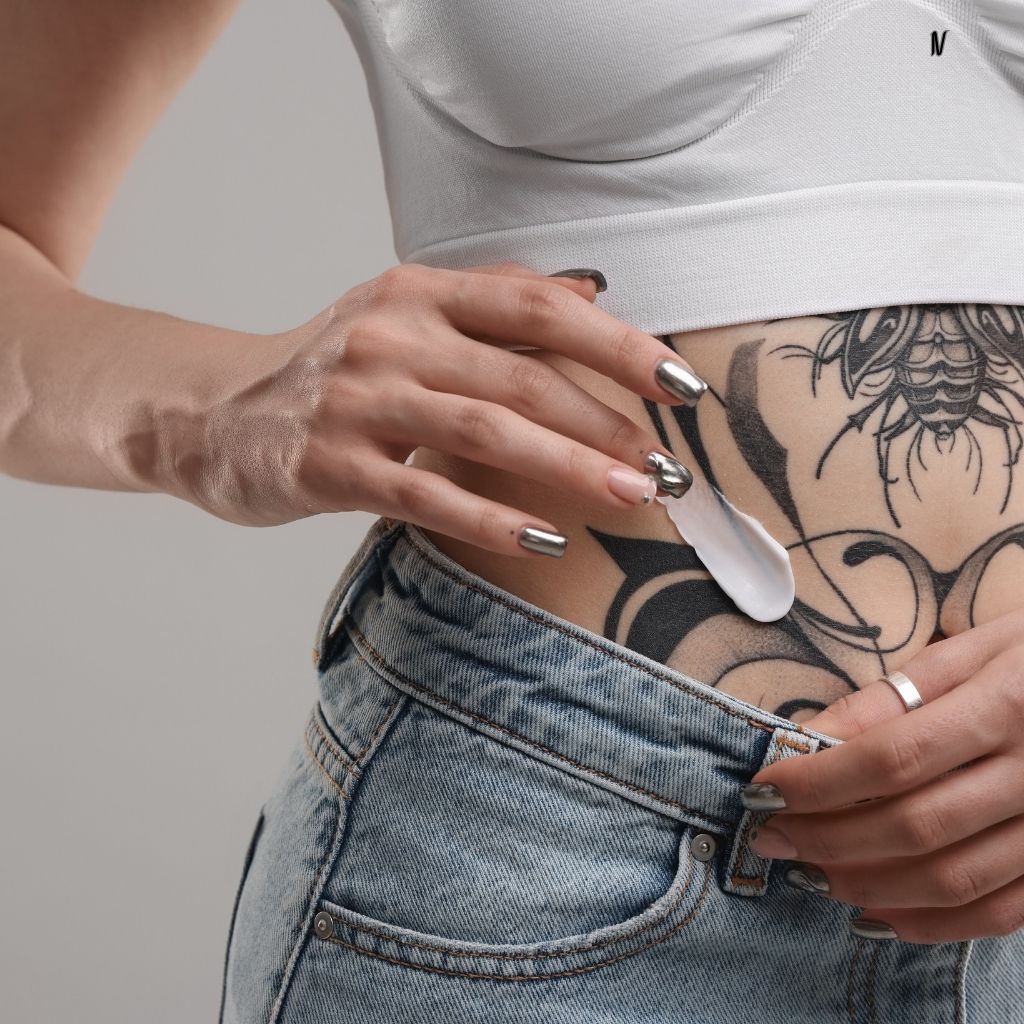
When you get a tattoo, ink is deposited into the dermis, the second layer of skin. This layer sits beneath the outer surface and holds the pigment that forms the tattoo design. Because the tattoo exists inside the skin, changes to your skin can affect how the tattoo appears.
Sun exposure, dryness, and aging can all influence tattoo clarity. When skin becomes dehydrated, tattoos may look dull or faded. When skin experiences repeated sun damage, pigments can break down more quickly.
Healthy skin acts as a clear window that allows tattoo colors and lines to appear bright and defined. Maintaining good skincare habits ensures that your tattoos continue to look their best.
The Healing Stages of a New Tattoo
Understanding how a tattoo heals helps you care for it properly during the first few weeks.
First 24 hours
Immediately after tattooing, the skin behaves like it has experienced a small wound. Redness, swelling, and mild tenderness are normal. Your tattoo artist will typically apply a protective covering to shield the area from bacteria.
Days 2–5
During this stage, the tattoo may feel slightly warm and begin forming a thin protective layer. Gentle cleaning and moisturizing help prevent excessive dryness.
Peeling stage
After several days, the skin may start to peel or flake. This stage is similar to mild sunburn peeling. Avoid picking at the skin, as this can affect how the tattoo heals.
Weeks 2–4
The outer layers of skin gradually recover. While the tattoo may look healed on the surface, deeper layers continue to repair themselves.
Proper care during these early stages helps prevent irritation and protects the tattoo’s final appearance.
Daily Skincare Habits That Protect Tattoos
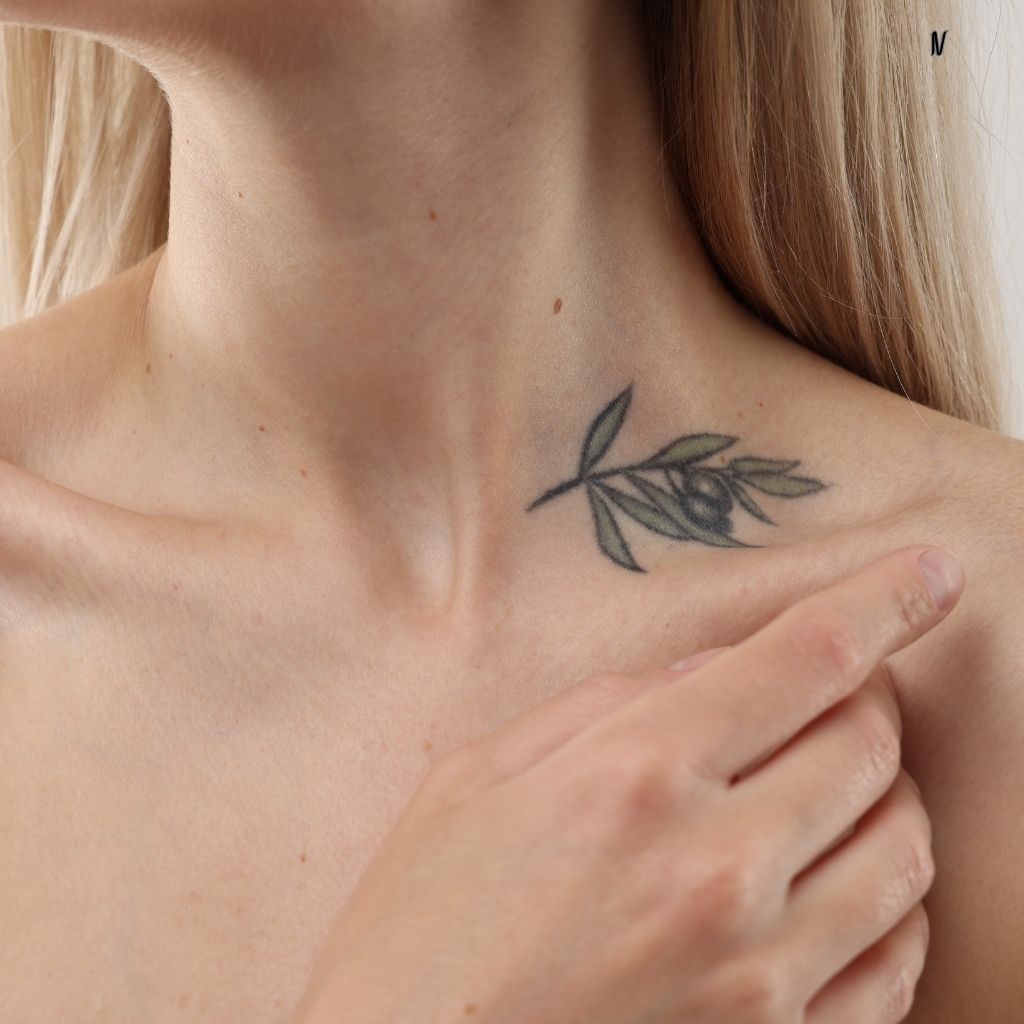
Even after a tattoo heals, daily skincare habits influence how long the design stays vibrant.
Keep skin hydrated
Hydrated skin helps tattoos appear clearer and brighter. Applying a gentle moisturizer keeps the skin barrier healthy and prevents dryness that can dull tattoo colors.
Look for moisturizers that contain soothing ingredients such as:
- glycerin
- ceramides
- aloe vera
- shea butter
Use gentle cleansers
Harsh soaps can strip the skin of natural oils. Using mild cleansers helps maintain a healthy skin barrier, which is essential for tattooed skin.
Fragrance-free products are often the safest option for sensitive or recently tattooed skin.
Protect tattoos from sun exposure
Sunlight is one of the main reasons tattoos fade over time. Ultraviolet rays break down pigment particles within the skin.
Applying sunscreen regularly is one of the most effective ways to preserve tattoo color and detail.
Best Skincare Ingredients for Tattooed Skin
Certain skincare ingredients support skin health without irritating tattooed areas.
Hyaluronic acid
Hyaluronic acid helps attract moisture to the skin, keeping it hydrated and plump. Hydrated skin allows tattoo colors to appear more vibrant.
Ceramides
Ceramides strengthen the skin barrier and help retain moisture. A healthy barrier protects tattoos from dryness and environmental stress.
Vitamin E
Vitamin E is often used in tattoo aftercare products because of its soothing and moisturizing properties.
Aloe vera
Aloe vera can calm irritated skin and provide light hydration, making it useful during the healing phase.
Skincare Ingredients to Use Carefully
While many skincare ingredients benefit the skin, some should be used cautiously on tattooed areas.
Strong exfoliating acids
Ingredients such as glycolic acid or salicylic acid can increase skin turnover. Overuse may cause tattoos to appear slightly faded over time.
Retinoids
Retinol and similar ingredients promote faster skin renewal. While beneficial for anti-aging, they may affect the appearance of tattoos if used excessively on tattooed areas.
Using these ingredients moderately and focusing them on non-tattooed areas can help maintain tattoo clarity.
Why Sunscreen Is Essential for Tattooed Skin
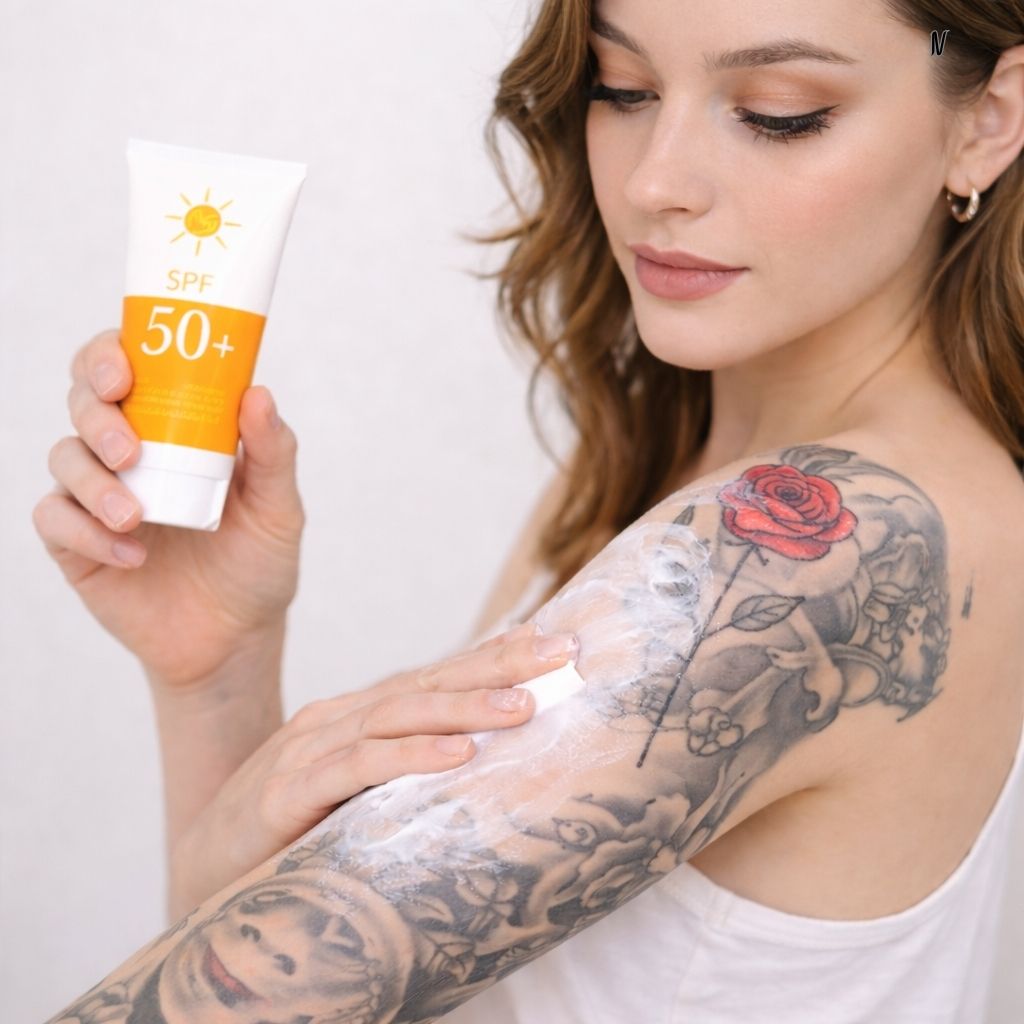
Sun protection is the single most important factor in maintaining tattoo quality. Without protection, ultraviolet radiation gradually breaks down tattoo pigments.
Applying a broad-spectrum sunscreen helps prevent this damage.
Choose sunscreens that offer:
- SPF 30 or higher
- broad-spectrum UVA and UVB protection
- lightweight, non-greasy formulas
Reapplying sunscreen when spending extended time outdoors helps maintain consistent protection.
Long-Term Tattoo Maintenance Tips
Over time, small lifestyle habits make a significant difference in how tattoos age.
Maintain healthy skin hydration
Drinking enough water and using daily moisturizers helps keep skin flexible and smooth.
Avoid excessive sun exposure
When possible, protect tattoos with clothing or shade during long outdoor activities.
Maintain balanced skincare routines
Gentle skincare practices support overall skin health and reduce the risk of irritation.
Consider touch-ups when needed
Even with good care, tattoos may gradually fade over many years. Some people choose occasional touch-ups to refresh color and lines.
Makeup and Body Products on Tattooed Skin
Many people wonder whether makeup or body products can affect tattoos.
Body makeup, moisturizers, and lotions generally do not harm healed tattoos. In fact, lightweight body luminizers or moisturizers can enhance the appearance of tattoos by giving the skin a subtle glow.
However, products used during the healing stage should be simple and fragrance-free. Avoid heavy makeup or cosmetic products on new tattoos until they are fully healed.
Signs Your Tattoo May Need Extra Care
Most tattoos heal without problems, but certain signs may indicate irritation or improper care.
Watch for:
- excessive redness lasting several days
- unusual swelling
- persistent itching or burning
- signs of infection, such as pus or severe pain
If these symptoms appear, consulting a professional tattoo artist or healthcare provider may help ensure proper healing.
Frequently Asked Questions
Do tattoos fade over time?
Yes. All tattoos gradually fade due to natural skin renewal and environmental exposure. Proper skincare and sun protection can slow the fading process.
Can moisturizing really improve tattoo appearance?
Yes. Hydrated skin reflects light more evenly, which helps tattoo colors appear clearer and brighter.
Is sunscreen necessary for tattoos even after they heal?
Absolutely. Sunscreen protects tattoo pigments from ultraviolet damage and helps maintain color vibrancy.
Can skincare routines damage tattoos?
Most gentle skincare routines are safe. However, excessive exfoliation or strong chemical treatments may affect tattoo appearance over time.
Final Thoughts
Tattooed skin deserves the same care as any other part of your body, but with a little extra attention. Healthy skin helps tattoos remain vibrant, clear, and visually striking for years.
Simple habits such as moisturizing regularly, protecting your skin from the sun, and maintaining gentle skincare routines can make a noticeable difference in how tattoos age.
When your skin stays healthy, your tattoos remain a beautiful reflection of the art and meaning you chose to carry with you.