
Spiraling, for me, rarely looks dramatic. It looks domestic. It’s me standing in my small Florence kitchen, opening the fridge even though I’m not hungry, just looking for a different feeling.
I’ve learned to recognize the early signs, which is not the same as controlling them. Control is a fantasy. Recognition is a skill. If I catch it early enough, I can usually steer myself into something calmer. Not happy. Just steadier.
One of the most effective ways I do that is boring in a way that makes me trust it. I go to the grocery store. I go to buy food that removes decisions from my next forty-eight hours.
Because when I’m close to spiraling, decisions are the fuel. I don’t need a thousand micro-choices. I need a small system that makes feeding myself automatic, which makes my body feel looked after, which gives my mind fewer excuses to run wild.
This is what I buy. Not a perfect list, not a “haul,” just the items that reliably keep me from tipping into that restless, hungry, too-much-thinking place.
The kind of spiral I’m talking about
It’s the spiral where you start treating your life like a problem you have to solve immediately. You begin reorganizing. You begin Googling. You begin imagining conversations. You begin replaying old mistakes with new dialogue.
I’ve had big spirals in my life, the ones with actual consequences, but these days it’s more often the smaller ones. The slow build of tension that turns into insomnia and snacking and self-criticism that feels strangely logical in the moment.
When I notice that build, I try to do something physical and simple. Food is one of the simplest forms of care I know, because it affects my nervous system whether I believe in it or not.
So my grocery strategy is built around steadiness. I buy foods that make it easy to eat even if I don’t feel like cooking, and I buy foods that feel gentle to my body. That’s the whole philosophy.
What I buy, and why
Eggs
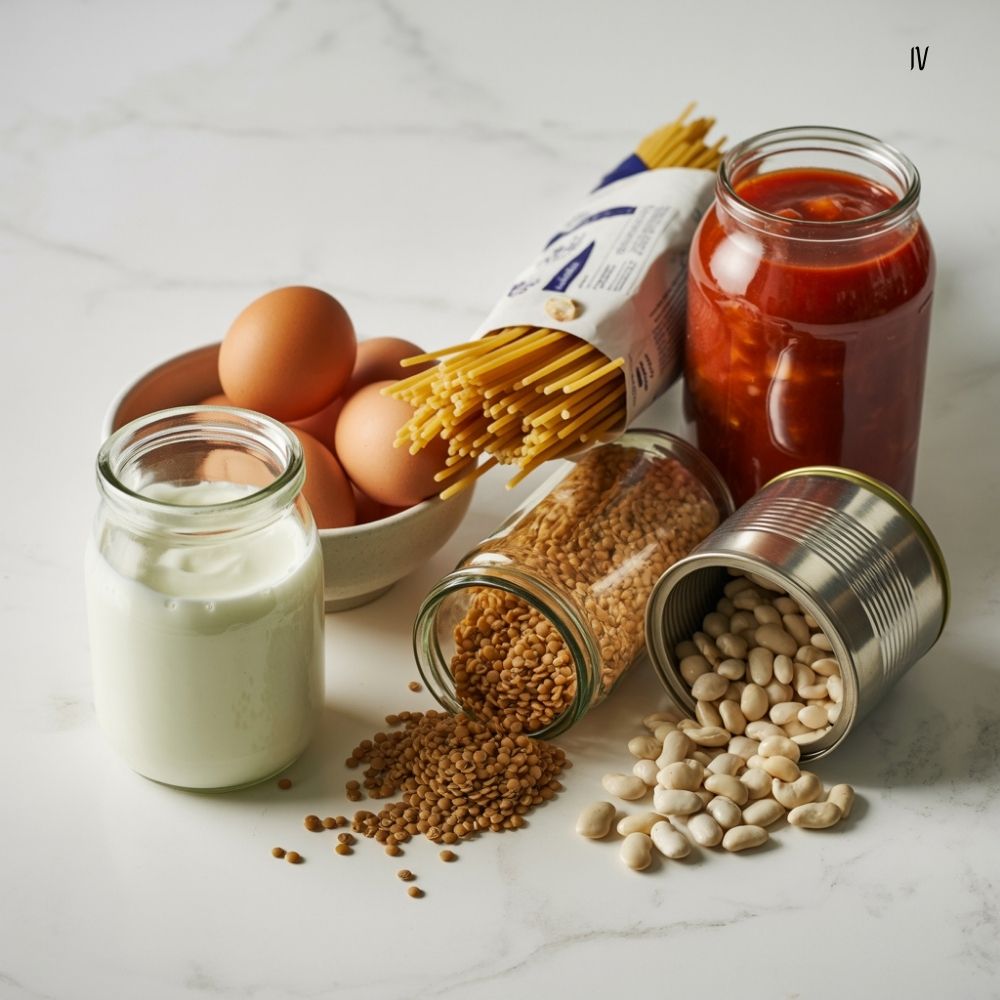
Eggs are my emergency exit. They are protein without drama. They are one decision, not a plan.
When I’m spiraling, I forget to eat real meals and then I wonder why I feel shaky and emotional. Eggs solve that quickly. I can scramble them, fry them, boil them, put them on toast, put them in broth, put them over rice. They make almost anything feel like food.
There’s also something grounding about cooking an egg. It takes three minutes. It has a clear beginning and end. It gives you a small success without demanding ambition.
Yogurt or kefir (plain, not dessert)
I buy plain yogurt because it’s food that feels calm. On days when my stomach is tight, sweet things can make me feel worse, like my body is buzzing. Yogurt is steady. I can add honey if I want. I can add fruit. I can eat it plain with salt and olive oil if I’m in that Mediterranean mood that makes me feel older and more sensible.
It’s also breakfast that doesn’t require decisions. When I’m anxious, mornings can feel fragile. Yogurt gives me something simple to start with.
Pasta and a jar of passata or crushed tomatoes
I always have pasta, but on spiral weeks I buy extra, because I want to remove the fear of running out. Running out of basics makes my brain feel threatened in a way that is disproportionate and yet very real.
Passata is my shortcut to something warm that tastes like a meal. With garlic and olive oil, it’s dinner. With beans, it’s dinner. With an egg cracked into it, it becomes something that feels like it could cure a person.
Canned beans or lentils
I keep chickpeas and cannellini beans for the same reason I keep eggs. They turn “I have nothing” into “I have something.”
Beans mean I can make a salad that actually fills me. Beans mean I can make soup without starting from scratch. Beans mean I can mash something onto toast and call it a meal without lying to myself.
When I’m spiraling, I’m tempted to eat snack food and call it dinner. Beans are the gentle alternative. They make me feel fed instead of merely occupied.
Lemons
Lemons are not essential, but they are my mood tool. Acid wakes up food, which wakes up me.
If I squeeze lemon over beans with olive oil and salt, it tastes like a choice, not a compromise. If I squeeze lemon into broth, it tastes brighter. If I squeeze lemon onto pasta, it feels less heavy.
Greens that don’t demand perfection
This is important. I don’t buy delicate greens when I’m trying not to spiral.
I buy spinach, kale, or arugula, the kind that can wilt into soup or pasta without fuss. If I buy something that requires careful washing and immediate use, I set myself up for guilt when I inevitably don’t do it perfectly.
Bread, but the right kind of bread
Bread is comfort, but there’s comfort that steadies you and comfort that makes you crash. I buy bread that can become a real meal, not just something to nibble.
In Florence, I often buy a simple loaf from the bakery, something with a chewy crust. Not because I’m romantic about bread, but because it makes toast feel like food. Toast with eggs. Toast with beans. Toast with olive oil and salt. Toast with yogurt and honey if I need something soft.
Parmesan or Pecorino
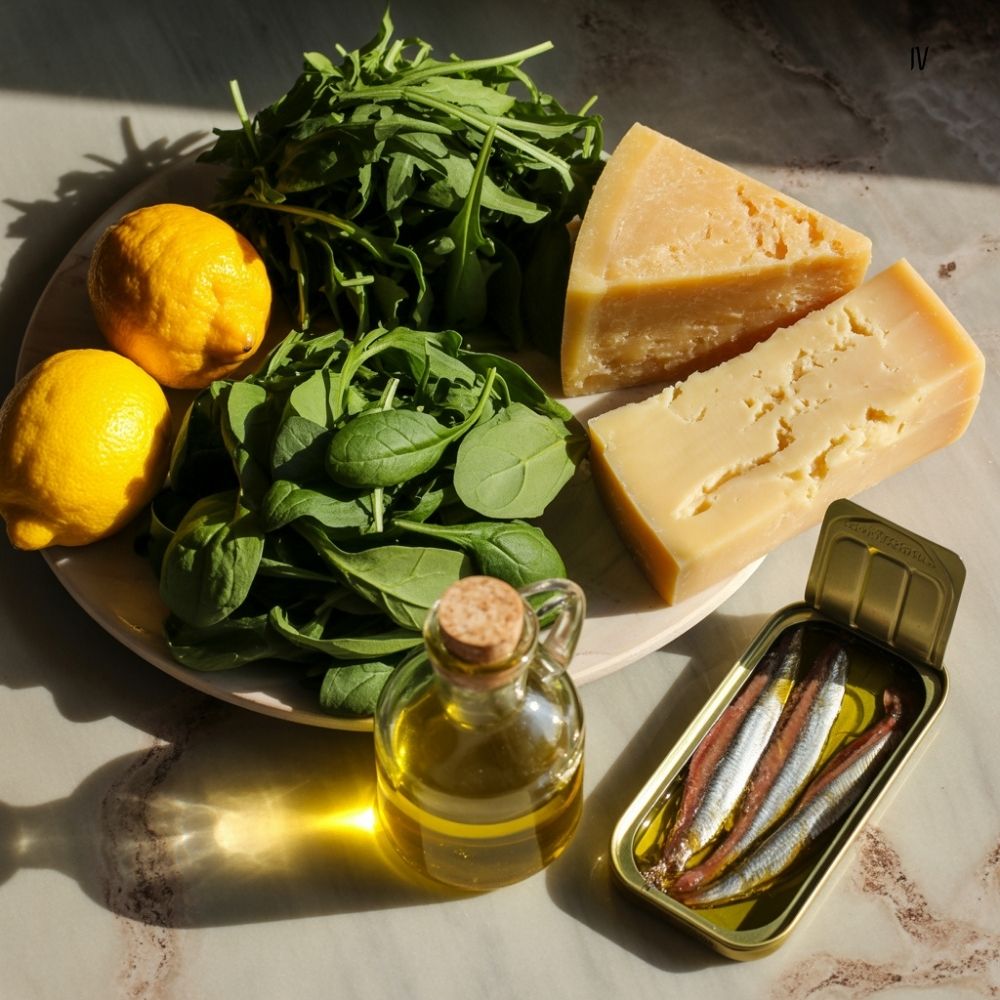
I buy hard cheese because it makes almost everything taste finished. It makes soup feel like dinner. It makes pasta feel like you cared. It makes scrambled eggs feel less sad. It also lasts, which matters when my energy is unpredictable.
Olive oil and one “real” savory thing
Olive oil is obvious in Italy, but I’m including it because it’s part of my stabilizing kit. Fat helps food feel satisfying, which helps my brain stop asking for more.
The “real savory thing” changes depending on my mood. Sometimes it’s anchovies. Sometimes it’s capers. Sometimes it’s olives. Something salty and strong that turns basic ingredients into something with flavor. It’s the difference between eating and feeling nourished.
I don’t need variety when I’m spiraling. I need a few strong flavors that make simple meals feel worth eating.
Broth cubes or boxed broth
This is the item people underestimate. Broth is the fastest way to get something warm in your body, and warmth is calming.
When I’m anxious, my appetite can disappear, but I can usually drink broth. Once something warm is in me, I can eat. Broth is the bridge.
Fruit that behaves
I buy bananas, apples, or clementines. Fruit that can sit on the counter and still be edible three days later. Fruit that doesn’t turn into guilt.
If I’m spiraling, I don’t need a box of delicate berries that will rot and make me feel like a failure. I need food that forgives me.
The hack: I shop in “three meals,” not in categories
Here is the practical hack I use at the store, because grocery shopping can become its own spiral. Too many options. Too many “shoulds.” Too many thoughts about being a better person.
I shop by imagining three very plain meals I know I will actually eat in the next two days. Not aspirational meals. The real ones.
For me, that’s usually:
Eggs + toast + greens.
Pasta + tomato + cheese.
Beans + lemon + olive oil + bread.
I buy what supports those three meals first. Only after that do I add anything extra, like chocolate or wine or a pretty seasonal vegetable. The point is to secure the basics before the store convinces me I need a new lifestyle.
This hack keeps my cart calm. It also keeps my brain from turning grocery shopping into identity shopping.
Final Thoughts
I used to think spiraling was a personality flaw, like I was too sensitive, too intense, too incapable of being normal. Now I think of it as a nervous system pattern that needs practical care, not shame.
The groceries I buy when I’m trying not to spiral are not exciting. They’re not impressive. They’re not the ingredients for a “new me.” They’re the ingredients for the life I already have, the one where I get tired, I overthink, I forget to eat, and I still deserve something warm and steady.
And in my experience, that’s a much better use of groceries than trying to buy my way into a calmer life. A calmer life starts with being fed. The rest can come later.