
Some mornings in Florence feel too public before I’ve even decided who I am. The streets are narrow, the cafés are loud in that cheerful Italian way, and even the mirrors feel like they have an opinion.
On those days, I don’t want to be interesting. I don’t want my face to invite conversation. I don’t want anyone to read me, compliment me, guess my mood, or ask a gentle question that turns into a longer one. I want to be present without being perceived.
This is where makeup gets misunderstood. People talk about it like it’s always a performance, always a statement, always confidence. Sometimes it’s the opposite. Sometimes makeup is privacy.
There’s a particular trick I only do on days like that, and I never do it when I feel social. It’s not glamorous. It doesn’t photograph well. It’s the kind of makeup that makes you look slightly unremarkable in the best possible way, like you slept fine and have nothing to explain.
The Kind of Attention I’m Avoiding
Attention isn’t always dramatic. It can be small and constant, like a bright light you can’t turn off. A stranger holding your gaze half a second too long. A friend saying, “You look so fresh today,” in a tone that implies they usually think you don’t.
I’m not against compliments. I just don’t want them when I’m trying to move through the day unnoticed. Compliments make me feel like I have to hold the look steady, like I can’t collapse back into my normal face without disappointing somebody.
The funny part is that “pretty makeup” and “attention makeup” are often the same thing, even when it’s subtle. Shine draws the eye. Contrast draws the eye. Defined lashes and crisp lips draw the eye. A clean highlight on the cheekbone draws the eye so much that it might as well wave.
So the trick I use is not about adding something. It’s about removing the little signals that say, “Look here.”
The Real Goal: Lower Contrast, Lower Shine, Lower Story
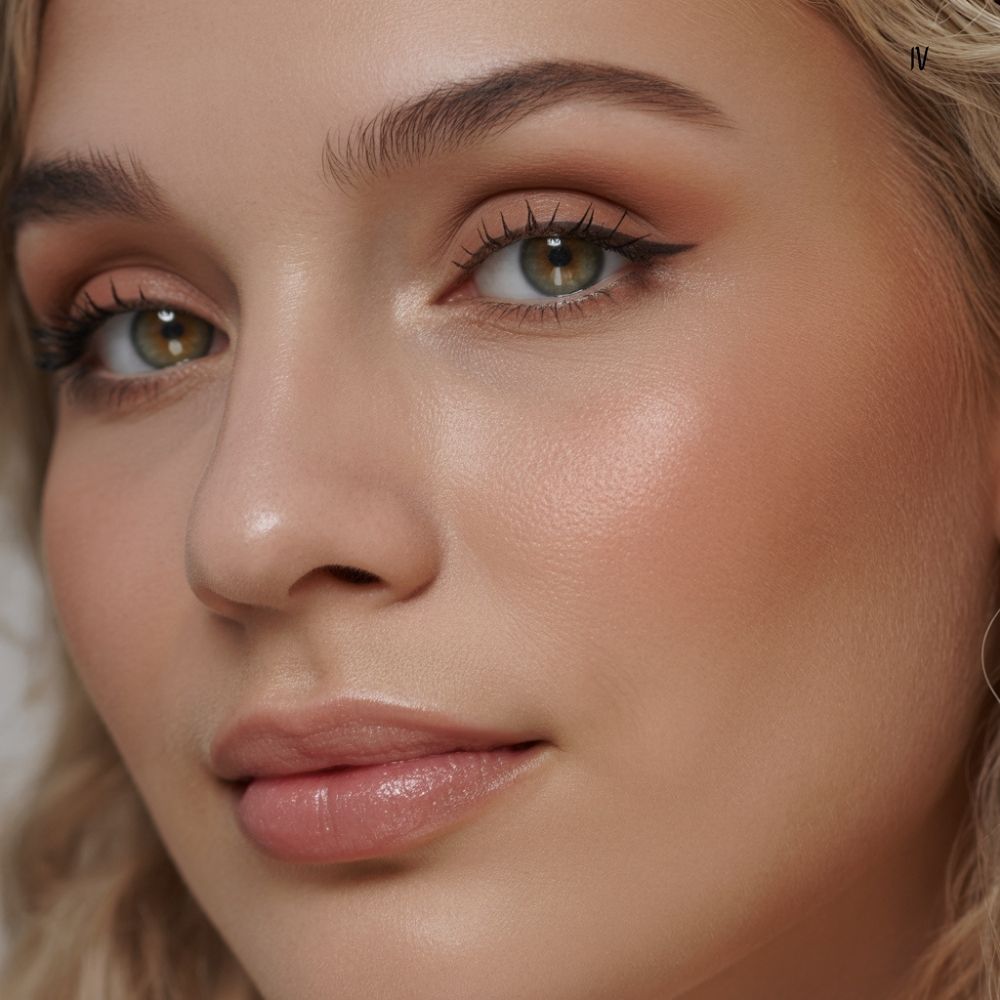
When I don’t want attention, I want my face to look like it belongs to me and not to a trend. I want to look awake, but not styled. I want my skin to look even, but not perfected. I want to look calm, even if I’m not.
My solution is always the same: I lower contrast. That means I don’t sharpen anything. I don’t brighten under the eyes in a way that looks cosmetic. I don’t build a lip line. I don’t lift the brows to look more “open.” I don’t make my eyes bigger. Bigger eyes are for being seen.
Instead, I soften everything just enough that the face becomes less readable at a distance. People can still see me, obviously. I just don’t feel like I’m broadcasting.
The Trick: The “Soft Veil” Layer That Mutes Everything
I do my makeup in a normal order at first, but very lightly, and then I add one final layer that acts like a soft veil. It slightly mutes whatever looks too crisp, too bright, too intentional. It’s the difference between “I did my makeup” and “I happen to look fine.”
The veil is not a new product. It’s whatever base product is left on my sponge or fingers after I’ve done the minimal coverage. Most days, it’s a thin skin tint or a light foundation. Sometimes it’s just the leftover concealer sheered out with moisturizer.
How I Do It, Exactly
I start with skincare that makes my face feel comfortable, not shiny. If my moisturizer is too dewy, I wait a minute, then press a tissue gently over the center of my face. It sounds fussy, but it takes five seconds and it stops the light from catching on my forehead like it’s trying to speak for me.
Then I do a minimal base. I cover redness around my nose, a little shadow under the eyes if it makes me look tired in a way I don’t enjoy, and any spot that pulls my attention when I look in the mirror. I keep it thin. Thick base makeup reads as intention, and intention reads as invitation.
I set only where I get shiny, usually the sides of my nose and the center of my forehead. I don’t powder my cheeks unless the day is humid and I know I’ll end up looking reflective by noon.
For eyes, I do almost nothing. This is important, because eye makeup is the fastest way to become visible. I curl my lashes. Sometimes I put a tiny amount of brown mascara only at the roots, and I comb most of it through so it looks like I simply have lashes. No dramatic length. No bottom lashes.
For brows, I brush them into place and stop. No sculpting. No sharp tail. I want my brows to look like they grew there, not like I designed them.
For lips, I use a tinted balm or a lipstick blotted down until it becomes a stain. It’s the lip equivalent of speaking quietly. You’re still present, just not announcing yourself.
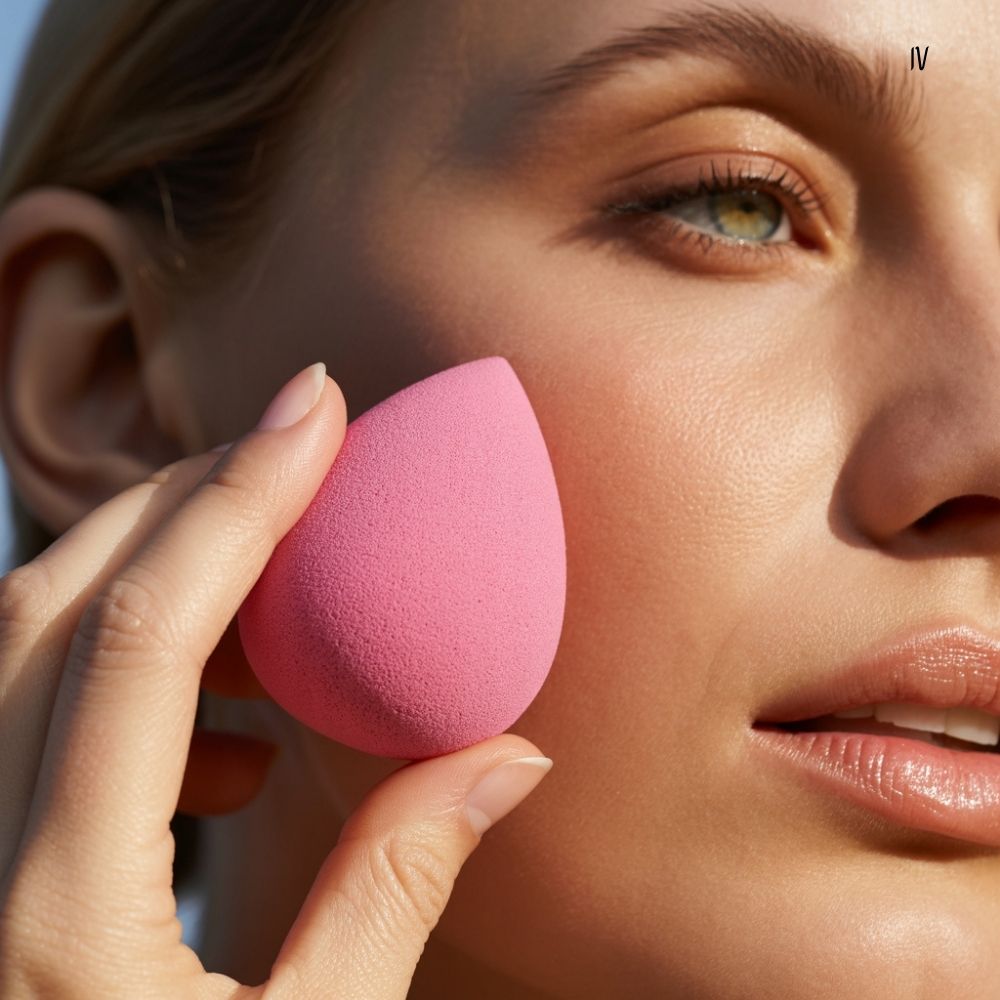
Then comes the actual trick. I take the sponge I used for my base, and I press it over the areas that look too defined: the edges of my concealer, the outer corners of my eyes if they look too lifted, the top edge of my blush if I used any, and even lightly over my lips if the color looks too clean.
This is the “soft veil.” It lowers contrast without making me look washed out. It mutes the borders so nothing looks drawn on. And immediately, my face stops looking like a message.
The Hack That Makes It Work
Here’s the practical hack that keeps this from turning into mud: I only veil the edges, not the center.
I press the sponge around the perimeter of features, not directly on the parts I need to stay alive-looking. I soften the outline of the concealer, not the under-eye itself. I blur the lip line, not the whole mouth. I tap around the brow tail, not over the entire brow. I am basically removing the punctuation.
It takes less than a minute, and it’s the only makeup technique I’ve found that reliably makes me feel less exposed.
If you try it, the temptation is to keep pressing until everything is uniformly smooth. Don’t. Uniform smoothness is its own kind of noticeable. The goal is believable skin, not a filter.
What It Looks Like in Real Life
It looks like nothing, which is the point. Up close, you can still see texture. You can still see that I’m a person. My freckles don’t vanish, they just stop competing with redness. My under-eyes don’t look brightened, they just look less like an accusation.
When I walk outside, I don’t feel like my face is leading the conversation. I feel like my body and my thoughts are allowed to arrive first.
There’s also a strange emotional effect to it. When my makeup is high contrast, I act high contrast. I become more performative without meaning to. I hold my mouth differently. I check my reflection in shop windows. I become someone who is trying to keep the look intact.
Why This Matters More Than It Should
There are days when the most radical thing I can do is look normal on purpose.
A lot of beauty content treats visibility like the prize. Be glowing. Be striking. Be noticed. Be unforgettable. I understand the appeal. I’ve had phases where I wanted that too, like proof that I was doing life correctly.
But I’m older now in the way that actually counts, which means I can admit that some days I just want to move through the world without being interpreted.
On the days I don’t want attention, I can give myself one small thing: a softened face, a quieter outline, a little less contrast, and the feeling that I belong to myself again before I belong to the street.
That’s enough. It’s more than enough.