
There are evenings when I can feel the decision-fatigue arrive before I even take my coat off, which is how I know it isn’t really about dinner. On those nights, I want one reliable tool that reduces choices and still produces food that tastes like it belongs to an adult life.
For me, that tool is one pan. I reach for it when I can’t handle another decision because it has become a default, and defaults are a form of care. The surface has marks. The handle gets hot. It has a small sheen that comes from years of olive oil and repeated use. It looks lived in, which I trust more than anything pristine.
When I use it, I stop thinking in options and I start thinking in a simple sequence: heat, oil, something to eat, salt, finish. The pan makes that sequence possible because it behaves predictably, and predictability is what you need when your mind is tired.
This post is not a pan review. It’s a note about why one reliable piece of cookware can change the mood of your kitchen, and it includes one practical hack that makes cast iron easier to live with, plus a very good one-pan Italian-style dinner that people actually want to eat.
Why I need a “default” pan at all
In a small kitchen, every object becomes emotional faster than it should. If something stays, it has to earn its place by doing more than one job, and it has to make my life simpler rather than giving me one more thing to maintain.
I used to own too many pans because I thought having options was the same thing as being capable. Options are only helpful when your brain has room. When your brain is crowded, options are just noise.
So I learned to build my cooking around a few defaults. One knife I like. One cutting board that doesn’t slide. One pan that handles most dinners. The cast-iron skillet became that pan not because I decided it would, but because it kept solving problems without asking me to think.
It browns things properly. It holds heat. It works on the stove and in the oven. It doesn’t warp. It doesn’t need babying if you understand a few basics. It turns random ingredients into something that tastes like structure.
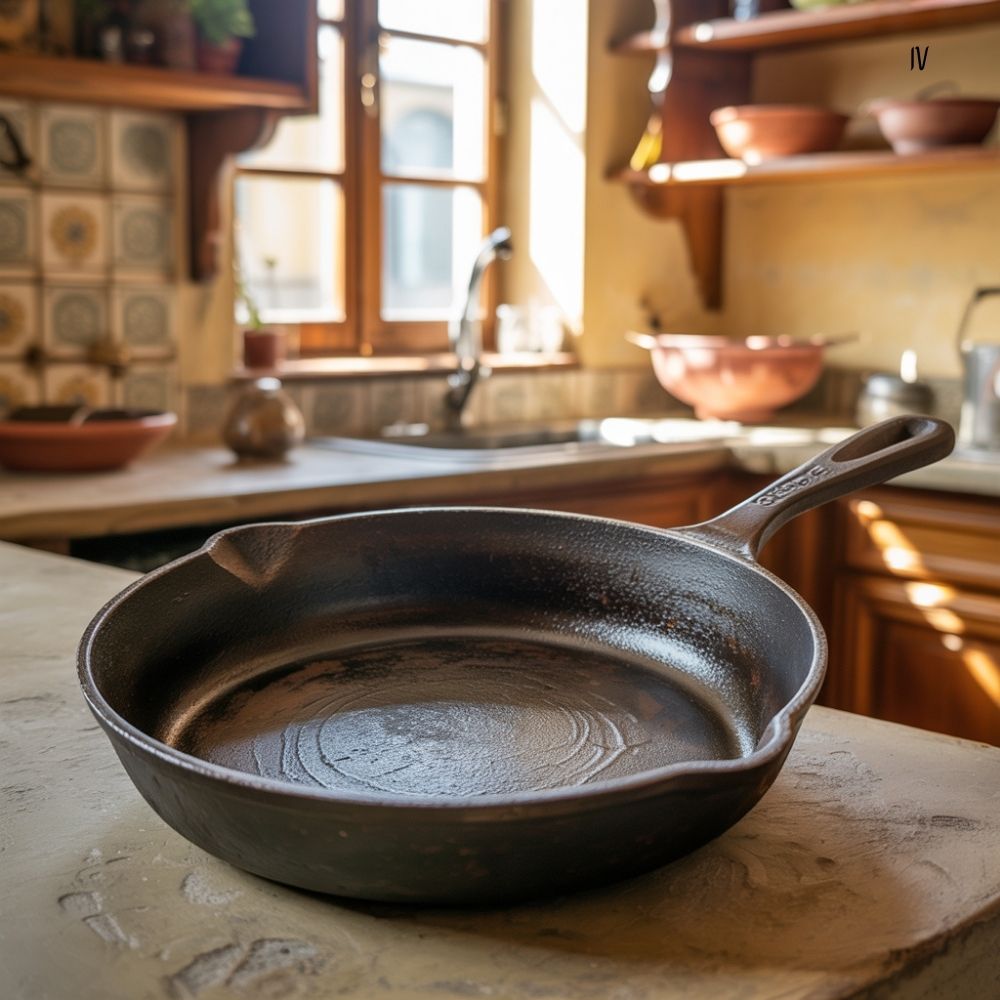
The pan: why cast iron, specifically
It is a medium cast-iron skillet, about 26 centimeters, with a weight that feels slightly annoying until you realize the weight is the point, because the weight holds heat and the heat holds the whole dinner together.
It gives you a good sear on vegetables and proteins without needing a lot of oil, and it keeps that heat steady so you’re not constantly adjusting the flame like you’re trying to land an airplane.
It also goes from stovetop to oven without drama, which means dinner can be one pan and one sequence, instead of three different steps that make you feel like you need a plan.
The hack that makes it easy: the two-minute “heat buffer” method
If people hate cast iron, it is often because they treat it like a normal nonstick pan, and then they get frustrated. Cast iron isn’t hard, but it has one rule that changes everything. Here is the hack I use, and it’s the reason the pan feels calm instead of temperamental.
I preheat the skillet on low heat for two minutes before I turn it up, and I let it warm gradually, like you’re easing into a bath instead of jumping into cold water. After those two minutes, I raise the heat to medium, add oil, and cook.
That is it. That small “heat buffer” prevents hot spots, reduces sticking, and makes the pan behave more evenly, which means I don’t have to hover and micromanage. Micromanaging is what I’m trying to avoid on low-decision nights.
If you try to rush cast iron, it punishes you. If you warm it slowly, it becomes the most reliable thing in your kitchen.
What I cook in it when I can’t handle another decision
This is the dinner I make most often in that pan when I’m tired and want something that feels Italian, because it tastes like the way Italian home cooking solves hunger: simple ingredients, strong flavor, and a quiet confidence that dinner doesn’t need to be complicated to be good.
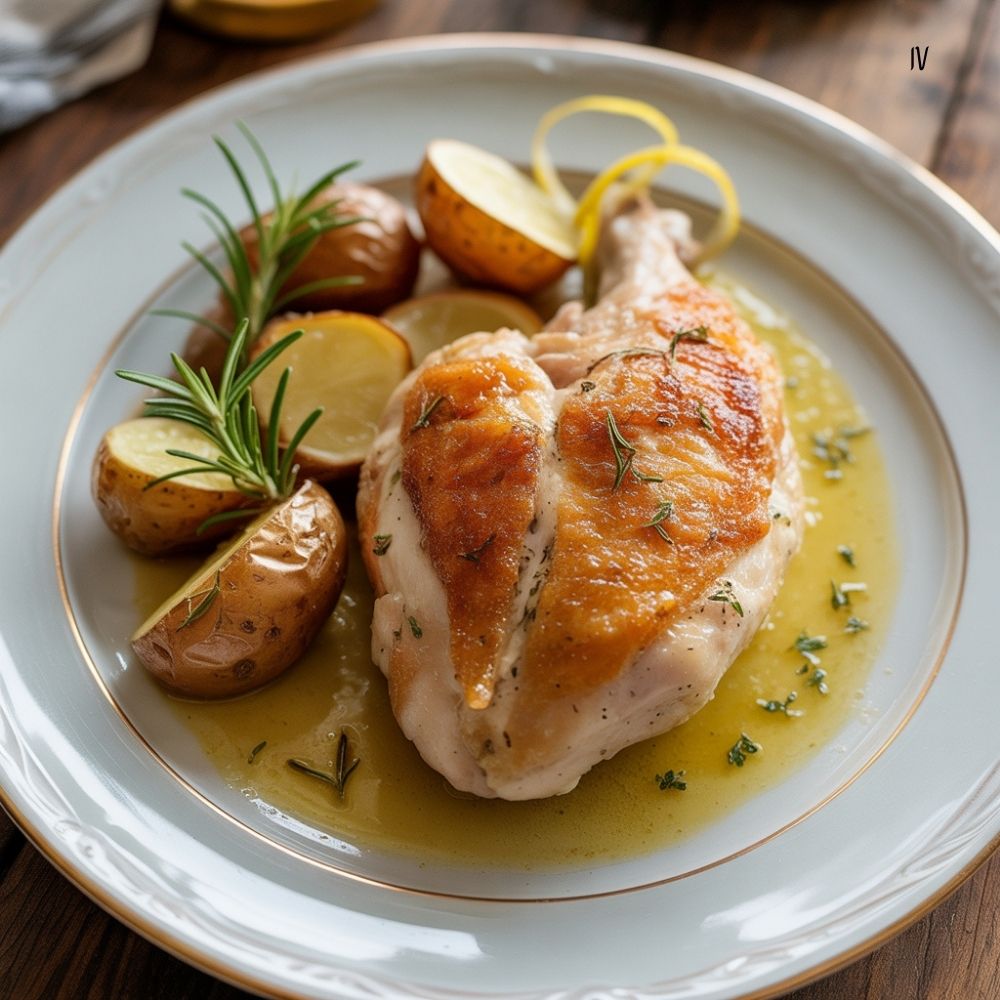
It’s a one-pan meal of crispy chicken thighs with lemony rosemary potatoes, finished with a quick pan sauce you can spoon over everything, plus a handful of greens if you have them. It tastes like something you would pay for, even though it is mostly potatoes, salt, and timing.
One-Pan Crispy Chicken with Rosemary Potatoes and Lemon Pan Sauce
Chicken thighs and potatoes roasted together in a cast-iron skillet until the skin is crisp and the potatoes are browned, then finished with lemon, garlic, and a small glossy pan sauce that makes it taste deliberate.
Ingredients
- 4 bone-in, skin-on chicken thighs
- 500 g potatoes, cut into small wedges or chunks
- 3 tbsp extra-virgin olive oil
- 3 garlic cloves, lightly smashed
- 2 sprigs fresh rosemary (or 1 tsp dried)
- 1 lemon (zest and juice)
- 1/2 cup white wine or chicken broth (wine is nice, broth is fine)
- Salt and black pepper
- Optional: a handful of spinach or arugula to wilt at the end
Tools
A 26 cm cast-iron skillet, a spatula or tongs, and an oven.

Cooking Instructions
1) Heat the pan the calm way.
Place the cast-iron skillet on the stove over low heat for two minutes, then turn it to medium. Add 2 tablespoons of olive oil and let it warm until it shimmers gently.
2) Start the chicken skin-side down.
Pat the chicken thighs dry and season them well with salt and pepper. Place them skin-side down in the skillet and let them cook undisturbed for about 6 to 8 minutes, until the skin is deeply golden and releases easily.
3) Add potatoes and aromatics.
Once the skin is crisp, flip the thighs and push them to the edges of the pan. Add the potatoes into the center with the remaining olive oil, a pinch of salt, the smashed garlic, and rosemary. Toss the potatoes in the oil so they start browning on the stove for about 3 to 4 minutes.
4) Roast everything in the oven.
Transfer the skillet to a preheated oven at 200°C (about 390°F). Roast for 25 to 30 minutes, until the chicken is cooked through and the potatoes are tender and browned. If your potatoes want more color, leave them a few minutes longer.
5) Make the pan sauce without making it a separate task.
Remove the skillet from the oven and place it back on the stove over medium-low heat. Transfer the chicken and potatoes to plates. Pour off excess fat if there is too much, but keep a little, because flavor matters.
Add the wine or broth to the hot pan and scrape up the browned bits with a wooden spoon. Add lemon juice and a pinch of lemon zest, then let it simmer for 1 to 2 minutes until it looks glossy.
If you have greens, toss a handful into the pan sauce for a few seconds until they wilt, then spoon everything over the chicken and potatoes.
Final Thoughts
The one pan I reach for when I can’t handle another decision is my cast-iron skillet, and I keep choosing it because it makes dinner feel like a simple sequence instead of a thousand choices.
It heats steadily, it browns things properly, it goes from stove to oven without drama, and it rewards repetition in a way that makes my kitchen feel calmer.
The two-minute low-heat preheat hack is what makes it easy, and the one-pan chicken and rosemary potatoes is what makes it feel worth it, because good food should not require you to be in a good mood first.
Sometimes you cook to become steadier, not because you already are. This pan helps me do that, and I trust it more than most advice.