
I own too many plates for someone who eats alone a lot. In the very ordinary way of living long enough to inherit pieces from different versions of yourself. A set you bought when you thought you’d host dinner parties. A couple of mismatched things from a market. A few pieces that arrived as gifts and stayed.
Most of them are fine. Some are even nice. And yet there is one plate I reach for on nights when I need dinner to feel like a treat, and it is not the nicest one. It’s the weird little plate.
It’s small, slightly oval, and not perfectly symmetrical. The glaze is a soft off-white that shifts toward warm cream under the kitchen light. There’s a thin hand-painted line near the rim that isn’t straight. It has a shallow dip in the center, so sauces collect in a way that looks intentional.
I bought it in a small shop near Santo Spirito years ago on an afternoon when I felt restless and convinced myself a new object would make my life more coherent. It didn’t, obviously, because objects don’t do that. But the plate stayed, and over time it became a tool, not a decoration.
When I eat off it, dinner feels like more than “food I assembled.” It feels like something I chose. Not because the plate is magical, but because it changes the scale of the meal and the feeling of the moment. It turns my apartment into a place where dinner happens on purpose.
Why a plate can change the mood of dinner
I used to think “making dinner feel special” required more effort, better ingredients, better timing, better energy. I tried that approach for years. It worked when I had a lot of energy and no mental noise, which meant it worked inconsistently.
Then I noticed something simpler.
When my week feels heavy, my appetite often becomes a little numb. Food becomes functional. I eat standing up. I eat distracted. I eat quickly. I don’t taste much. And then I wonder why I feel unsatisfied even though I technically ate.
A different plate doesn’t fix your life, but it can change your posture. It changes the way you serve yourself. It creates a pause between cooking and eating, which is often the missing step.
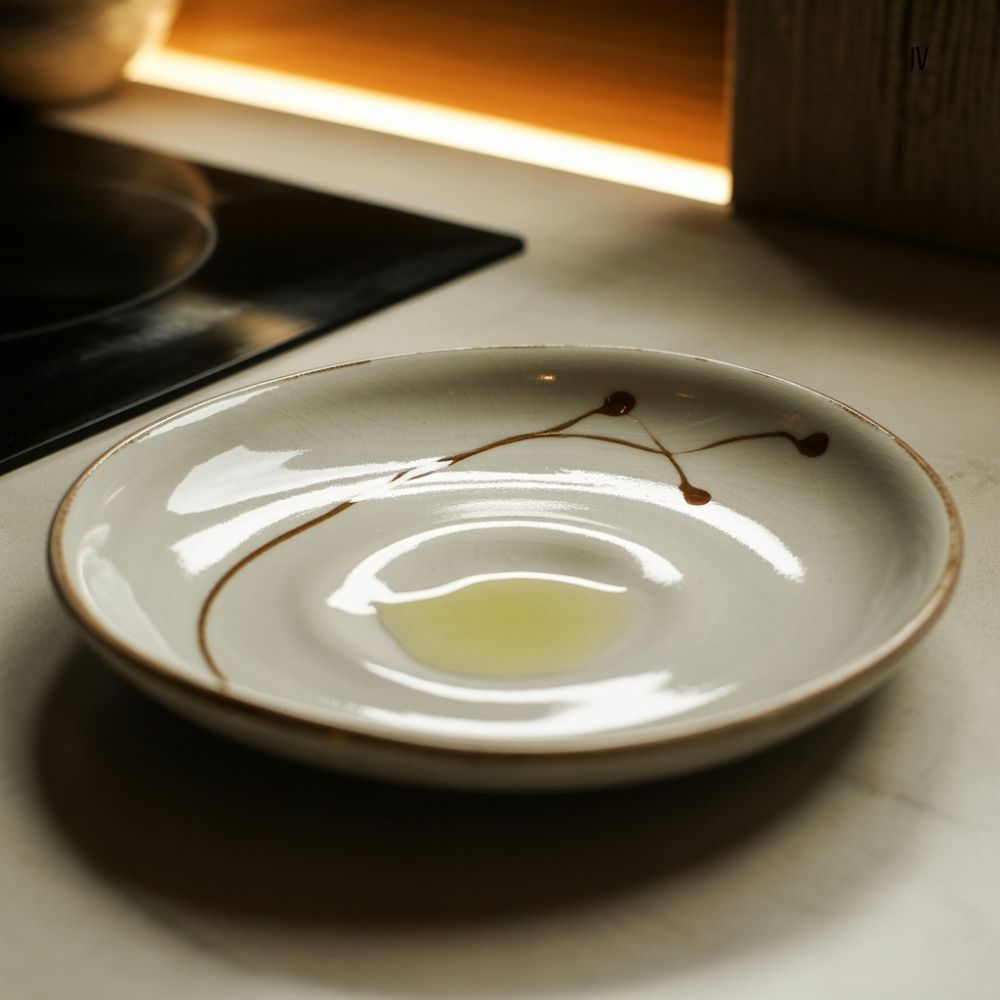
The plate itself, and why it’s the one I trust
I don’t use my “best” plates when I want dinner to feel like a treat, because the best plates come with expectations. They make me feel like the dinner should match them. They make me feel like the table should be cleared. They make me feel like I should perform being put together.
The weird little plate doesn’t do that. It’s already imperfect. It already has a personality. It already looks lived-in. It invites simple food.
It’s also small, which is part of why it works. Small plates make meals feel deliberate. They make portions look generous without being excessive. They encourage you to build a plate rather than dump food onto it.
I don’t think this is purely aesthetic. I think it’s psychological. The brain reads the plate as a signal: this is a moment, not just calories.
The practical hack that makes any dinner feel like a treat
Here is the hack I use, and it’s the only plating advice I’ve ever kept because it works even when you don’t care. I plate in threes.
Not three courses. Three elements on one plate. One main thing, one supporting thing, and one bright or crunchy thing. That’s it.
It can be beans, greens, and lemon. It can be eggs, toast, and tomatoes. It can be leftover roasted vegetables, a spoon of yogurt, and herbs. The point is that “three” makes the plate feel composed without requiring effort or perfection.
Two can feel unfinished. Four can start feeling like you’re trying. Three is the sweet spot between intentional and calm.
What I put on that plate when I want it to feel like a treat
The food I make for the weird little plate is not complicated. It’s usually something warm and simple with one strong flavor note, because strong flavor is what makes basic food feel satisfying.
One of my favorite “treat dinners” that isn’t pasta is a very Florence-appropriate combination: crispy ceci (chickpeas) with rosemary, a lemony greens pile, and a soft, salty cheese or yogurt. It’s essentially pantry food made elegant by heat and acid.
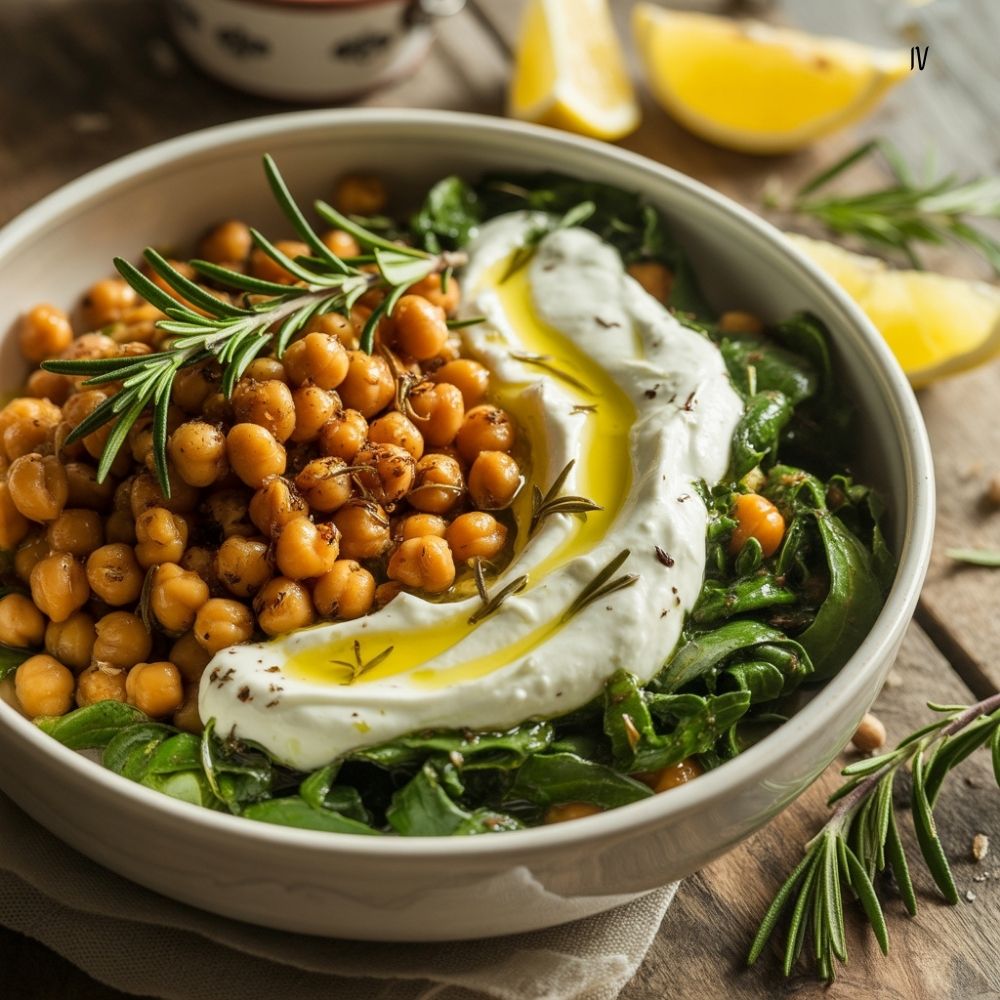
Crispy Rosemary Chickpeas with Lemony Greens and Ricotta (or Yogurt)
A quick, crispy, savory plate built from chickpeas and greens, finished with lemon and a soft creamy element, which tastes like you made an effort even when you didn’t.
Ingredients
- 1 can chickpeas, drained and rinsed
- 2 tbsp extra-virgin olive oil
- 1 garlic clove, lightly smashed
- 1 sprig rosemary (or 1/2 tsp dried)
- Salt and black pepper
- A pinch of chili flakes (optional)
- 2 big handfuls arugula or spinach
- 1 tsp lemon juice (plus zest if you want)
- Ricotta, stracciatella, or thick plain yogurt for serving
- Optional: a few cherry tomatoes or shaved fennel for freshness
Cooking Instructions
Warm olive oil in a skillet over medium heat. Add garlic and rosemary and let them perfume the oil for a minute, then add chickpeas with salt and pepper. Cook, stirring occasionally, until the chickpeas are crisp in spots and deep golden, about 8 to 10 minutes. Turn off heat and add chili if using.
Toss greens with lemon juice, a pinch of salt, and a tiny drizzle of olive oil. Spoon a soft smear of ricotta or yogurt onto the plate, pile chickpeas beside it, then add the lemony greens. Finish with black pepper and, if you want it brighter, a little lemon zest.
Why it tastes like a treat
Because it’s hot and crisp and salty, then suddenly cool and creamy, then sharp and lemony, and your mouth doesn’t get bored. It’s the kind of plate that makes you sit down even if you planned to eat standing up.
Final Thoughts
The weird little plate is not special in a luxury sense. It’s special because it has become my signal for “treat,” and treat, for me, is not about extravagance. It’s about feeling like my life has edges and moments and choices.
When I need dinner to feel like a treat, I use the small imperfect plate, I plate in threes, and I make something crisp and flavorful with one bright element that wakes everything up. It’s a system, not a mood, which is why it works.
I don’t always need to elevate dinner. Sometimes I just need dinner to feel like it belongs to me, not like something I rushed through. That plate helps, quietly, in the way the best objects do, and I keep it because it makes ordinary nights feel slightly more real.